Woodland can be managed in a number of ways, and this Basic woodland management course will cover several different methods with...
Find out more
Have you ever walked through a woodland and wondered what stories the plants beneath your feet could tell? From carpets of bluebells and wood anemones to the subtle clues left by ancient woodland indicator species, this practical Woodland Flora course will help you see the woodland in a completely new way.
Join us in our own Grown in Britain certified woodland in Hampshire and learn how to identify common woodland plants, understand what they reveal about woodland history and management, and gain the confidence to explore the natural world with a more knowledgeable eye.
This course is suitable for:
Woodland owners and managers
Conservation volunteers
Wildlife enthusiasts
Walkers and countryside lovers
Students of ecology and conservation
Anyone wanting to improve their plant identification skills
No previous botanical knowledge is required.
This Woodland Flora course is ideal for anyone who wants to get more out of woodland walks, or who owns, manages or works in a woodland and wants to learn more about the plants growing there.
Walking in the woods is a great way to enjoy the countryside, but it’s easy to miss the fascinating variety of woodland plants and the stories they can tell. This practical course will help you to:
Identify woodland flora in Little Hyden Wood
Understand how plant communities change with coppicing cycles and woodland management
Explore how soil, light levels and other conditions influence the plants growing in a woodland
Discover where different species are likely to be found
Learn how to identify the plant family of an unfamiliar flower using its key features
How to identify common woodland flowers and plants
Recognise ancient woodland indicator species and understand what they tell us
How woodland management affects ground flora
How soil type, light levels and woodland structure influence plant growth
How to recognise plant families using key identification features
How woodland flora changes with the seasons
Basic botanical recording techniques
How to use field guides and identification keys
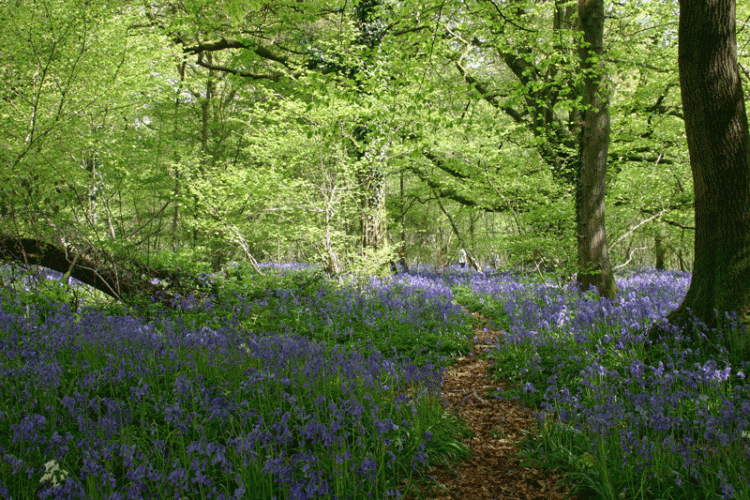
Unlike classroom-based courses, this training takes place in our own 64 acres of Grown in Britain certified ancient woodland in the heart of the South Downs, near Clanfield, Hampshire.
Over the last 23 years, we have been restoring, managing and monitoring our woodland habitats. Much of the woodland is now at different stages of restoration, providing a unique opportunity to see how coppicing, woodland management and conservation practices influence the plants growing around us.
You’ll learn from real examples in the woodland rather than photographs and presentations alone, discovering first-hand how the plants beneath your feet tell the story of the woodland.
Depending on the season, we may encounter a variety of woodland plants and flowers, including:
Bluebells
Wood Anemones
Primroses
Lesser Celandine
Dog’s Mercury
Wild Garlic
Common Violets
Other ancient woodland indicator species
Every course is different, as the woodland changes throughout the year. The plants we encounter will depend on the season and the conditions within the woodland on the day.
£70
All of our woodland courses take place in our own 64 acres of ancient woodland in the heart of the South Downs, near Clanfield, Hampshire. Much of the woodland is at different stages of restoration, providing a practical setting to learn about trees, woodland ecology and sustainable management.
Our woodland is certified by Grown in Britain, reflecting our commitment to the responsible management of our woodland and the sustainable use of British timber.
Around 7 hours, allowing us plenty of time to explore our ancient woodland and discover the wide variety of plants it supports, including some less common species.
Tea and coffee are provided throughout the course. Other food is not included, although we can arrange a barbecue if requested in advance.
There are a number of local hotels and bed and breakfast establishments in the area. We can provide details on request.
Answer: We run the course from the beginning of April to the end of September. This gives us the opportunity to see a wide range of plant species.
Answer: No. This course is suitable for complete beginners as well as those wishing to develop their existing botanical knowledge.
Answer: This varies depending on the season, weather and woodland conditions. Every course offers different learning opportunities, and the plants we encounter will depend on what is growing at the time.
Answer: The course takes place outdoors within our woodland, allowing you to learn directly from living examples.
Answer: The primary focus is woodland flora, although tree species and their influence on woodland habitats will be discussed.
Answer: Please bring sturdy footwear, weather-appropriate outdoor clothing and a notebook. A camera is also useful if you wish to record the species encountered during the day.
Answer:
Yes. We discuss how woodland management practices, particularly coppicing, influence ground flora and overall woodland biodiversity. Understanding the plants present can also help woodland owners make informed management decisions.
Lorem ipsum dolor sit amet, consectetur adipiscing elit. Ut elit tellus, luctus nec ullamcorper mattis, pulvinar dapibus leo.
This course is taught by Chris Westcott, one of the founders of Three Copse Woodland Products. Chris has a lifetime of experience and knowledge in plant identification and has spent more than 20 years studying and managing the flora within our own woodland.
As part of our practical woodland management, Chris has carried out regular plant surveys, helping us understand how the woodland changes over time and how our management practices influence its biodiversity.
This first-hand experience gives Chris a wealth of knowledge to share, helping participants develop their own plant identification skills while gaining a better understanding of woodland ecology and conservation.
Woodland can be managed in a number of ways, and this Basic woodland management course will cover several different methods with...
Find out moreJoin us in our own ancient woodland near Clanfield, Hampshire, and discover the traditional skills of the coppice worker....
Find out moreLearn to identify trees throughout the seasons on our practical woodland course in Hampshire. Discover how to recognise trees...
Find out more