
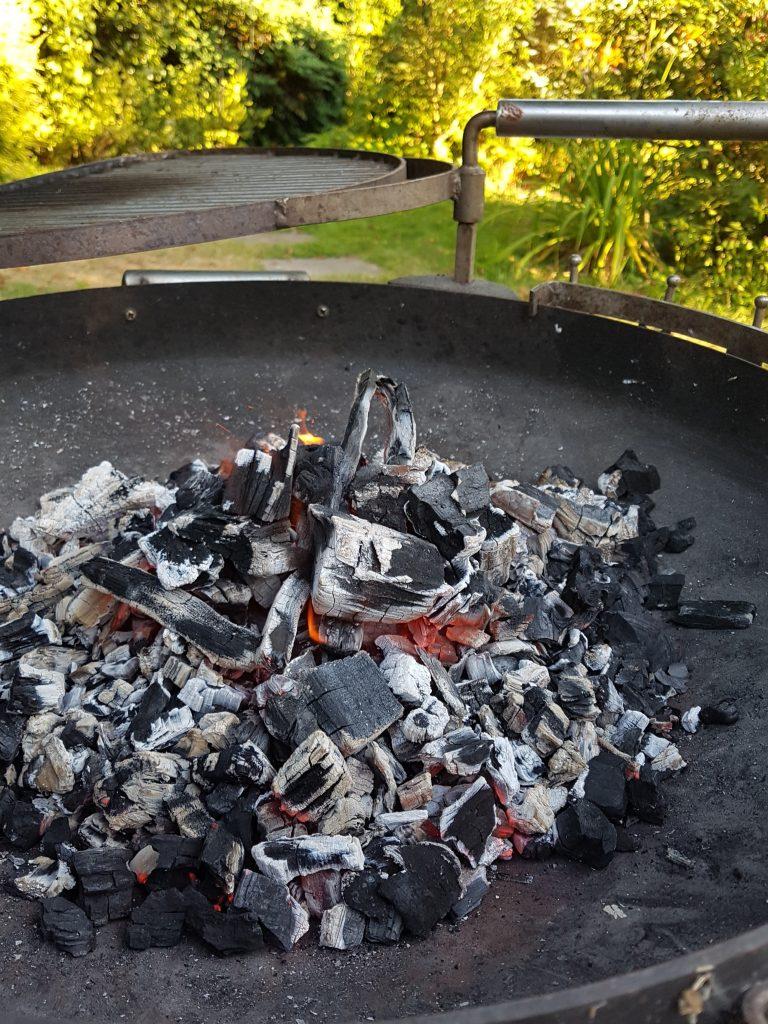
This is a question we see asked time and time again, especially across BBQ groups on social media. Below, we aim to give you a clearer understanding of why British charcoal is better not only for you, but also for the environment and your local economy.
To understand why supporting local charcoal burners matters, it is important to look at the journey charcoal takes from woodland to barbecue, and the impact that process can have along the way.
The production of charcoal varies slightly depending on the method used, but the basic principles remain the same. Wood is heated in a controlled environment with a limited oxygen supply, allowing it to char rather than fully burn. This process, known as pyrolysis, removes moisture and volatile compounds, leaving behind virtually pure carbon.
The type of wood used has a significant impact on the finished product. Dense hardwoods generally produce a longer-burning charcoal, while softer woods burn faster and create a lighter fuel.
The sustainability of charcoal depends entirely on where the timber comes from and how it is managed. Responsibly sourced charcoal can support the restoration and management of woodlands, biodiversity, and traditional rural skills. Poorly sourced charcoal, however, can contribute to deforestation and environmental damage. Unfortunately, it is not always obvious from the bag alone which type you are buying.


Where your charcoal comes from can have a huge impact on how sustainable it really is. In some parts of the world, the timber used for charcoal production may have been illegally felled or sourced from sensitive environments such as mangrove swamps or tropical rainforests. In areas where timber is already scarce, charcoal production can place even greater pressure on fragile ecosystems.
Felling in all British woodlands is controlled by the Forestry Commission through felling licences, so you can be sure British charcoal comes from a properly managed woodland.
There is also the environmental cost of transport to consider. Imported charcoal often travels hundreds or even thousands of miles by ship and road before reaching the end user, relying heavily on fossil fuels throughout the journey. Suddenly, what may appear to be a natural and environmentally friendly product can carry a far greater ecological footprint than many people realise.
Lumpwood charcoal has a number of properties that make transport and storage more complicated than many people realise. As a fuel designed to ignite easily, charcoal must be handled carefully during shipping, particularly when transported in large quantities by sea. To reduce the risk of accidental ignition, imported charcoal is often treated before transport.
Charcoal can also be quite brittle. The more it is handled and shaken during transport, the more likely it is to break down into dust and small fragments. To minimise this, some manufacturers use binding or stabilising agents. In quality charcoal these may be natural products such as starch-based binders, although there have been allegations within the industry of lower-grade materials being used in some imported products.
Once the charcoal reaches the UK, these treatments can make it harder to light naturally. As a result, manufacturers or consumers may rely on firelighters, lighter fluids, or chemical accelerants to get the barbecue going. Not only does this add further processing and chemical use, but it can also affect the flavour of the food being cooked. ‘Easy light’ charcoal may have these chemical accelerants already added.
Locally produced charcoal, made from properly seasoned timber and handled over shorter transport distances, lights more naturally and avoids many of these additional treatments altogether.
In some parts of the world, charcoal production is still linked to extremely poor working conditions. Workers may be paid very little for difficult and physically demanding labour, while in some regions there have also been serious concerns raised about forced labour and exploitation within the supply chain.
In countries where labour regulations and health and safety standards are weak or poorly enforced, workers involved in charcoal production may have little or no protective equipment. Exposure to charcoal dust, smoke, and fumes over long periods can cause significant damage to the lungs and overall health. There have also been reports of children being involved in parts of the production and sorting process in certain areas of the world.
In the UK, strict labour laws, health and safety regulations, and environmental standards were introduced many decades ago to protect workers and consumers alike. Choosing locally produced charcoal can help support transparent supply chains, fair working conditions, and higher environmental standards, while also supporting rural jobs and traditional woodland management.

It can often be very difficult to trace exactly where imported charcoal has come from or who has produced it. In many cases, the price paid in the shop bears little resemblance to what the original producer actually receives.
A bag of charcoal produced in places such as South America, Africa or the Far East may pass through several companies, brokers, importers, and distributors before it finally reaches the shelves of a supermarket, cash and carry, or petrol station in the UK. Each stage adds cost and profit margins, while the people producing the charcoal at the source may see only a very small share of the final retail price.
As a result, the benefit to the local economy where the charcoal is eventually sold can be minimal. By comparison, buying locally produced charcoal helps support woodland workers, rural businesses, and sustainable woodland management directly within the local community, as well as supporting your local economy.
So, to answer the original question — why buy British charcoal?
Not only is British charcoal typically free from the chemical additives and accelerants often associated with imported products, but it is also produced from sustainably managed local woodlands. By choosing locally made charcoal, you are supporting traditional woodland management practices that help maintain healthy habitats, biodiversity, and rural skills.
The money you spend stays within the local economy, helping to support woodland workers, small businesses, and rural jobs rather than long international supply chains. In turn, this contributes to better-managed woodlands, a reduced transport footprint, and a healthier environment overall.
New courses and dates available