
Have you ever walked through a woodland and wondered what stories the plants beneath your feet could tell? From carpets of bluebells and wood anemones to the subtle clues left by ancient woodland indicator species, this practical Woodland Flora course will help you see the woodland in a completely new way.
Join us in our own Grown in Britain certified woodland in Hampshire and learn how to identify common woodland plants, understand what they reveal about woodland history and management, and gain the confidence to explore the natural world with a more knowledgeable eye.
This course is suitable for:
No previous botanical knowledge is required.
This Woodland Flora course is ideal for everyone who wants to get more out of woodland walks, works in or owns a wood and wants to find out more about the flowers present.
A walk in the woods is a great way to exercise but most people totally miss the magic of the different species of woodland plants and trees. This course is designed to help you:
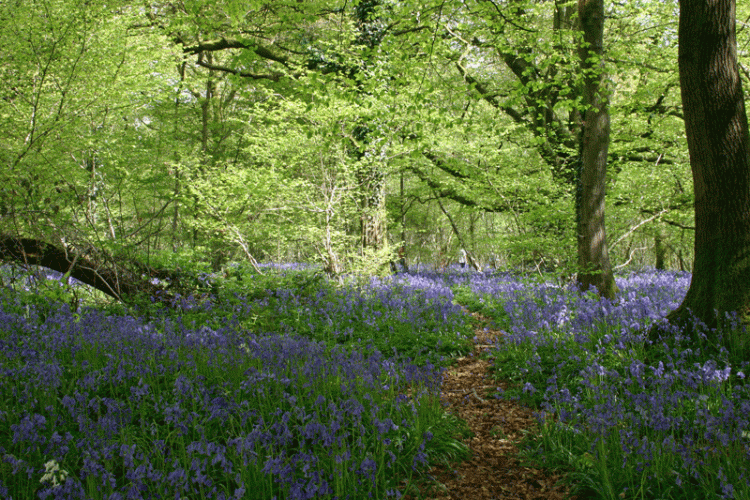
Unlike classroom-based courses, this training takes place within our own actively managed woodland in the South Downs.
Over more than 20 years we have been restoring, managing and monitoring woodland habitats. This provides a unique opportunity to see how coppicing, woodland management and conservation practices influence the woodland flora around us.
You’ll learn from real examples rather than photographs and presentations alone.
Depending on the season we may see:
Every course is slightly different as the woodland changes throughout the year.
Answer: £70
Answer: We run the course from the beginning of April to the end of September. This gives us the opportunity to see a wide range of plant species.
Answer: No. This course is suitable for complete beginners through to those wishing to improve their existing knowledge.
Answer: This varies depending on the season, weather and woodland conditions. Every course offers slightly different learning opportunities.
Answer: The course takes place outdoors within our woodland, allowing you to learn directly from living examples.
Answer: The primary focus is woodland flora, although tree species and their influence on woodland habitats will be discussed.
Answer: Sturdy footwear, weather-appropriate clothing, a notebook and a camera if you wish to record species encountered during the day.
Answer: Yes. We discuss how woodland management practices such as coppicing can influence ground flora and overall woodland biodiversity.
Answer: All of our woodland based courses are run in our own piece of ancient woodland, nr the village of Clanfield in Hampshire close to the A3 and A272.
Answer: No, we do not provide food; however, tea and coffee are available throughout the day.
Answer: Yes, all our courses are beginner friendly, we aim to tailor our course to the person joining us to make it a truly unique experience
Answer: No, we always aim to teach from the ground up, so no previous experience is needed on any of our courses
yes, we aim to carter for all ages. Some of our more physical course may require some adaptation but with notice this can be catered for. While we try and make access for all possible this has to be tempered with the natural state of the woodland so it may not be ideal for manual wheelchairs or mobility scooters. We can arrange disable accessible course space for our leather work courses by prior arrangement.
Answer: Yes, although those under 18 require an adult to attend for insurance and safeguarding purposes
Answer: While we try to carry on as much as possible sadly sometimes rain and wind do stop play for safety reasons, because our woodland causes are run in the great outdoors the weather can affect how and if we are able to run, gale force winds and trees are not a good combination, if we have to postpone a course we will try and give as much notice as possible and arrange an alternative date.
Answer: Yes, we regularly send out gift vouchers to participants where a relative wishes to give a gift. Please use our contact us page to ask for more details.
Answer: yes, generally park course attendees in an area just of the road as access to our work and training area is by 4x4 only.
For our leather work course over road parking is available
Answer: yes, we encourage our participants to take photo’s and share the love on social media, the only time this may change is if there are safeguarding issues with under 18’s present.
Answer: Yes, we provide all tools and materials for our courses although if you have you own tools you are welcome to bring them along.
Answer: There are a good number of local hotels and b and b’s in the area for which we can give you detail on application.
Answer: Please wear sturdy outdoor clothing suitable for the weather and strong footwear. Avoid loose clothing, jewellery, or anything that could become caught in machinery.
This course is taught by Chris Westcott, one of the founders of Three Copse Woodland Products. Chris has a lifetime of plant identification knowledge and over 20 years she has owned our woodland has carried out regular plant surveys as part of our practical woodland management. This has allowed us to adjust our management to better enhance the the biodiversity of the woodland.
You may also be interested in our other courses
New courses and dates available